Wayuu Communities and Colombia's Cannabis Export Boom: A Missing Seat at the Table
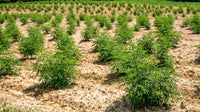
Photo by Danilo Arenas via Pexels.
Drive east out of Riohacha toward the Venezuelan border and the landscape turns to thorn scrub and salt flats within an hour. This is La Guajira, the northernmost tip of Colombia, and for the better part of two decades in the mid-to-late twentieth century it was the country's marijuana capital -- long before anyone in Bogota was writing legislation about cannabis exports or medical licenses. The Wayuu, the indigenous people who have called this peninsula home for centuries, watched their territory become synonymous with cannabis production during what Colombians still call the bonanza marimbera, the marijuana boom of the 1970s and 80s.
That history matters now because Colombia has spent the last decade constructing what it hopes will be one of the world's most competitive legal cannabis export industries, built on Law 1787 of 2016 and refined most recently by Decree 1138 of 2025. Cultivation licenses have multiplied, pharmacy-grade flower is heading to European shelves, and the country markets itself internationally as a low-cost, high-altitude cannabis producer. Yet when you look at who actually holds those licenses, La Guajira is nearly invisible. The Wayuu -- the community most historically bound to Colombian cannabis, for better and worse -- are largely absent from the rolls of a legal industry built on a plant their homeland once defined. That absence is the puzzle this piece sets out to examine.
The Bonanza Marimbera: How La Guajira Became Cannabis Country

Photo by José lopez via Pexels.
The bonanza marimbera didn't start as a Wayuu enterprise, but it swallowed their territory whole. Beginning in the early 1970s, American demand for marijuana and a temporary supply gap from Mexico turned the Sierra Nevada de Santa Marta and the Guajira peninsula into the western hemisphere's marijuana breadbasket. Growers, smugglers, and armed groups poured into a region that had previously been sparsely populated and largely left alone by the Colombian state. For roughly a decade, before Medellín and Cali cartels shifted the country's illicit economy toward cocaine in the 1980s, La Guajira was the epicenter of a cannabis trade that generated fortunes, corrupted local institutions, and left a trail of violence that outlasted the crop itself.
Colombia Built a Legal Cannabis Industry -- Where Does La Guajira Fit?

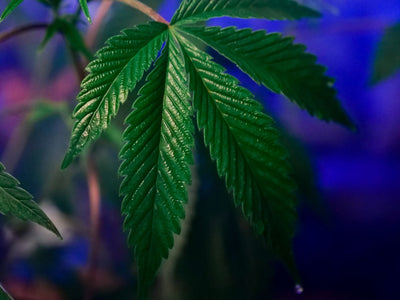
Photo by CRYSTALWEED cannabis via Unsplash.
Colombia's legal cannabis framework traces back to Law 1787 of 2016, signed on 6 July of that year, which authorized the cultivation, manufacturing, export, and medical use of cannabis and its derivatives -- a genuine break from decades of prohibition-first drug policy. The following year, Decree 613 of 2017 filled in the operational details, setting up a licensing system jointly administered by the Ministry of Justice, the agricultural regulator ICA, and the food-and-drug authority INVIMA. Growers need separate authorizations depending on whether they're cultivating seed, non-psychoactive hemp, or psychoactive cannabis, and each layer requires its own paperwork, inspections, and fees.
The Misak Precedent: A Different Indigenous Community Got There First
If there's a single data point that undercuts any argument that Colombia's licensing system is structurally closed to indigenous communities, it's the Misak. On 15 May 2020, the Ministry of Justice granted a cannabis cultivation license to a Misak community in Cauca department, in the southwestern highlands -- the first time an indigenous community anywhere in Colombia had secured one. The license covered cultivation for medical and scientific use, and it was treated at the time as a proof of concept: that a community-governed cabildo, operating under its own traditional authority structures, could clear ICA and Ministry of Justice requirements without handing control of the crop or the land to an outside commercial partner.
A Different Kind of Involvement: Trafficking Networks in La Guajira Today
While La Guajira sits mostly outside Colombia's legal cannabis economy, it hasn't stayed outside the drug trade altogether -- it's just a different substance and a different set of relationships. Reporting from March 2025 described narcotrafficking networks using Wayuu community members as intermediaries along cocaine smuggling routes running through the peninsula and out toward the United States, taking advantage of the porous, poorly monitored border with Venezuela and the deep local knowledge Wayuu families have of the terrain. One detail from that reporting stands out for anyone familiar with Wayuu social structure: among the intermediaries identified was a palabrero, the traditional mediator figure responsible for resolving disputes and maintaining order between Wayuu clans without recourse to state courts.
What Real Wayuu Participation Would Require

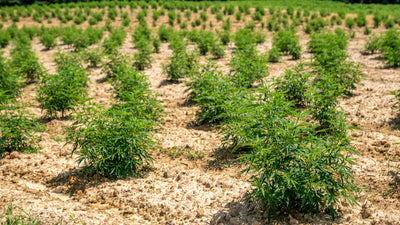
Photo by Luis Ospino via Pexels.
Getting from where things stand now to a genuine Wayuu foothold in legal cannabis isn't primarily a legal problem -- it's an infrastructure and capital problem, and a governance problem layered on top. Export-grade cannabis destined for European pharmacies has to meet EU-GMP standards, which means climate-controlled drying and processing facilities, validated cold-chain logistics, and seed-to-sale traceability systems that track every plant from clone to finished product. In a region where many Wayuu communities still rely on rainwater collection and seasonal wells because there's no reliable piped water, and where the annual rainfall in parts of the peninsula barely clears a few hundred millimeters, that kind of build-out is a genuinely different order of challenge than it is in the mild, well-irrigated highlands of Cundinamarca or Antioquia.
Every time Colombia's cannabis industry makes international headlines, the metrics are the same: how many EU-GMP certifications the country has stacked up, how many kilograms of dried flower cleared customs for Germany or the UK, how many pharmacy chains are stocking Colombian-grown product. Almost none of that reporting asks whether the communities historically bound up with the plant's Colombian history -- the ones who lived through the bonanza marimbera, who buried people over marijuana routes decades before anyone imagined a legal export market -- have a stake in what that history became. La Guajira's absence from the licensing rolls isn't illegal or even unusual by industry standards. It's just conspicuous, given the region's specific history with this specific crop.
The Misak license proves the door isn't bolted shut. A community-governed cabildo, operating under its own traditional authority and without ceding control to an outside operator, can navigate ICA and Ministry of Justice requirements and come out the other side with a legitimate cultivation license. Whether Wayuu authorities in Uribia, Manaure, or elsewhere on the peninsula choose to walk through that same door -- and whether Bogota is willing to make the path viable given La Guajira's water scarcity and poverty rates, rather than leaving small growers to clear EU-GMP hurdles on their own -- is genuinely unresolved. Decree 1138's two-year priority window for small and medium growers is running right now. Whether anyone in La Guajira uses it is worth watching.
Sources
- Colombia Medical Cannabis 2026: Flower Sales & Adult-Use
- Is Cannabis Legal in Colombia? The 2026 Guide for Expats & Tourists -
- The Wayúu, Indigenous Peoples of Colombia (2026) - My trip to Colombia
- [2026] Meeting the Wayuu, Colombia's first indigenous group | Heritage | Visit my Colombia
- Colombia Cannabis Regulations 2026: Medical and Adult-Use Guide | Rudick Law Group