1000W LED Grow Lights: Overkill or Perfect Fit?
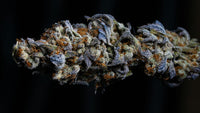
Photo by Andrés Gómez via Unsplash.
Somebody asks "is a 1000 watt LED overkill for my tent" almost every week in every grow forum worth reading, and it's the wrong question. It assumes 1000 watts is a fixed, known quantity, like a gallon of water or a foot of ruler. It isn't. The right question is: what does 1000W actually mean on the specific fixture you're looking at, because two lights both wearing that number on the box can differ by a factor of six or seven in real power draw.
A true-watt 1000W LED, meaning one that genuinely pulls close to a thousand watts from the wall, is built to run a 4x4 to 5x5 foot flowering canopy. That's not a guess, it's how the thermal and optical design of these fixtures gets engineered. Drop that same real 1000W unit into a 2x2 closet and you've got a legitimate overkill problem: too much heat, too much intensity, wasted electricity, and a canopy that bleaches at the center while the corners scorch. But drop a "1000W equivalent" fixture that only draws 150-250W into a 4x4 and you've got the opposite problem, and it's the one that actually torpedoes more first grows.
Marketing wattage and wall-draw wattage are two different languages, and growers who mix them up end up blaming a light for underperforming when the light was never built for that footprint in the first place. This article walks through the real sizing math, so you're buying against your actual tent dimensions and your actual canopy, not against a number printed on a box by someone in a marketing department.
True Watts vs. 'Equivalent' Watts: The Trap That Ruins Grows
Here's the trap in plain terms: a lot of fixtures sold as "1000W LED grow lights" are drawing somewhere between 100 and 250 real watts from the wall. That "1000W" isn't describing the fixture's actual electrical draw -- it's an equivalency claim, a holdover from the HPS era, telling you this LED supposedly replaces a 1000W high-pressure sodium bulb in output. Sometimes that claim is roughly honest. Often it's marketing math stretched about as far as it can go without triggering a lawsuit.
A genuine high-output LED that pulls 600-1000W of true wall draw is the fixture that actually handles a full 4x4 flowering canopy with authority -- even PAR distribution, real penetration into a dense colas, no falloff at the edges. A unit drawing 150W dressed up in "1000W equivalent" branding is not that fixture, no matter what the box says. It'll do fine over a 2x2, mediocre over a 3x3, and disappointing over anything larger.
Dr. Awais Yousaf, writing for Grow With Hydroponics in May 2026, flags this exact scenario as one of the most common beginner mistakes he sees: someone buys a labeled "1000W" LED expecting a monster harvest to match, sets it up over a tent sized for real 1000W output, and discovers weeks later that the fixture was actually built for a footprint half that size. The plants don't fail dramatically. They just stretch, underperform, and finish light on yield in a way that's hard to diagnose unless you already know to check the spec sheet.
That's the actual fix, and it's not complicated: open the spec sheet before you open your wallet. Look for actual power draw in watts, sometimes listed as "input power" or "true wattage," not the fixture's marketing name. Reputable manufacturers publish this number plainly because they're not trying to hide behind it. If a listing makes you dig for the real draw or buries it in fine print, that's information too.
This single mismatch -- buying a label instead of a spec -- is probably the biggest reason growers conclude their light underperformed, when the honest diagnosis is that the light was never sized for the tent to begin with.
What a True 1000W LED Actually Covers

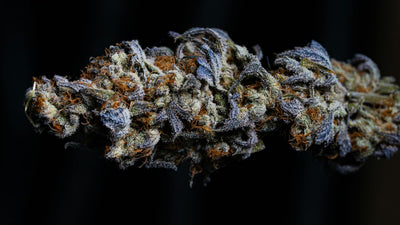
Photo by CRYSTALWEED cannabis via Unsplash.
Strip away the marketing and the industry consensus on true 1000W LEDs is actually pretty tight: a genuine 1000W-draw fixture is matched to a 4x4 to 5x5 foot flowering footprint. That's not a soft suggestion, it's where the photon math and the thermal design converge for most current multi-bar LED architectures.
One widely-referenced current sizing guide puts it bluntly: 1000W of true draw over a 4x4 tent isn't overkill, it's the correct spec, delivering somewhere in the 1200-1400 micromol/m2/s range at canopy level during flower. That's a genuinely high-intensity environment, appropriate for a well-trained canopy with supplemental CO2 and a well-managed grow room climate, not a light you're apologizing for.
Other sources push the usable ceiling out to a 6x6 foot footprint for the same true 1000W fixture, but they attach a real caveat when they do: shrink the footprint below 4x4 and you start scorching canopy with intensity the plant can't use, stretch it past 6x6 and the corners of the tent fall off hard -- PPFD readings at the edges can drop to a fraction of what's happening under the center of the fixture. A 6x6 claim on a single 1000W unit should be read as an outer edge case, not a comfortable target.
Now flip it to the small-tent scenario, because this is where the actual overkill conversation belongs. Put a true 1000W-draw fixture over a 2x2 or 3x3 tent and you're generating heat and light you have no use for. You're paying to produce a photon flux that your canopy physically can't absorb without getting bleached in the center, while the edges -- close enough to the fixture's core, in a tent that small -- still end up overexposed. You're also fighting a heat load that a 2x2 or 3x3 tent's exhaust setup usually isn't sized to handle.
Dimming that oversized fixture down helps -- running a true 1000W unit at 40-50% output over a small tent is a lot better than running it at full blast -- but you're still carrying the upfront cost of hardware built for double or triple your actual canopy. It's like buying a delivery van to run errands around the block: it'll work, but you paid for capacity you'll never touch.
The Real Sizing Math: Watts Per Square Foot and PPFD

Recommended true wattage scales sharply with tent size, rising from 160W for a compact 2x2 ft tent to 1000W for a 5x5 ft tent, reflecting the 30-40W per square foot guideline for optimal grow light coverage.
If you want a number to actually work from instead of trusting a box, start here: target 30 to 40 true watts per square foot of flowering canopy. That's real wall-draw watts, divided across your actual tent footprint, not the equivalency number. A 4x4 tent is 16 square feet, so 30-40 W/ft2 lands you at 480-640W on the low end and pushes toward 640-1000W+ if you're running a leaner, more efficient fixture at the higher end of that intensity range. A 5x5 is 25 square feet, putting you in the 750-1000W true-draw zone -- which is exactly why a genuine 1000W fixture keeps showing up as the standard answer for that size tent.
Wattage per square foot gets you in the right neighborhood, but PPFD is the number that actually tells you what's happening at the plant. For flowering, you want an average PPFD across the canopy in the 600-900 micromol/m2/s range -- and the word average matters here. A single reading taken directly under the center of the fixture will almost always read higher and can mislead you into thinking you're overpowering the space when the edges are actually underlit. Map it, don't spot-check it.
Fixture efficiency has also moved the goalposts recently. Modern high-efficiency multi-bar LEDs, using better diode technology than what was standard even three or four years ago, are now covering a full 5x5 footprint on just 500-650W of true draw -- delivering the same PPFD that used to require the full 1000W. That's a meaningful shift: the old assumption that "bigger footprint always needs a bigger wattage number" is getting rewritten by diode efficiency, not just fixture size.
The actual diagnostic tool here isn't the number on the box at all -- it's a PPFD map taken at multiple heights above canopy: 18, 24, and 30 inches. Take readings at those three heights across a grid of points (center, mid-canopy, corners) and you'll see immediately whether a fixture is properly sized, oversized, or falling short at the edges.
For your own tent: take the square footage, multiply by 30-40, and that's your rough true-watt target before you go shopping for a specific fixture.
Efficacy Matters More Than the Wattage Label in 2026

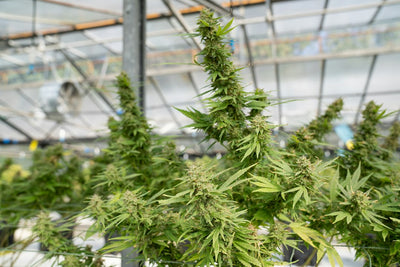
Photo via Unsplash.
Wattage claims across brands are close to useless for comparison unless you also know efficacy -- how many micromoles of usable light a fixture produces per joule of electricity it consumes. This is the number that actually separates a well-engineered LED from a fixture riding on an inflated equivalency label, and 2026 raised the bar on it meaningfully.
The DesignLights Consortium's V4.0 standard, which took effect in 2026, pushed the minimum photosynthetic photon efficacy threshold up to 2.5 micromol/J -- an 8.7% jump over the previous V3.0 floor. That's not a trivial tightening. It means fixtures that would have qualified as efficient just one certification cycle ago no longer clear the bar.
Put that number in context against the old standard-bearer: even the most efficient double-ended 1000W HPS fixture on the market tops out well below that new LED floor -- the V4.0 minimum sits more than 45% above it. HPS isn't in the conversation anymore on efficiency terms. LEDs didn't just catch up to high-pressure sodium, they lapped it.
When you're comparing 2026-era fixtures against each other, use efficacy as your first filter, wattage second. Anything above 2.0 micromol/J is baseline-competent for a modern LED. Above 2.2 micromol/J starts to separate genuinely well-engineered fixtures from the pack. Check this spec before you let a wattage claim on the box do the talking -- a lower true-wattage fixture with strong efficacy can out-produce a higher-wattage, poorly-engineered one for less electricity.
There's real money attached to making this switch, too. Over 175 utility-funded horticultural lighting rebate programs are now active across North America -- roughly triple the number that existed in 2020 -- and many offset 30-70% of the cost of upgrading from HPS to qualifying LED fixtures. That's a serious dent in upfront cost if you're running a legal commercial operation eligible for utility programs.
One caveat worth flagging before you count on it: some 2026 rebate programs have paused new applications for LED grow light incentives. Growers who already received a Notice to Proceed under the old terms typically still get a full 12 months to complete their project and claim the rebate, but new applicants in paused programs are out of luck for now. Check your specific utility's current program status before you build a budget around a rebate that may not be accepting new applicants.
Matching the Light to Your Tent, Not the Other Way Around
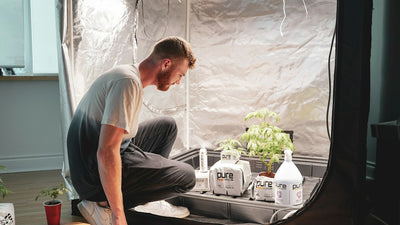
The honest answer to "what light do I buy" starts with a tape measure, not a wattage number. For a 2x2 or 3x3 tent, look at fixtures in the true 250-450W draw range rather than buying a 1000W unit and dimming it down. You'll pay less upfront, run a lower electric bill all season, and generate less excess heat that your smaller tent's exhaust fan has to fight against. There's no efficiency argument for oversizing here -- a well-matched 300-400W true-draw fixture over a 3x3 will out-produce a dimmed 1000W unit on cost-per-gram basis almost every time.
For a 4x4, the math and the market both converge on the same answer: a genuine 600-1000W true-draw LED is the sweet spot most current guides land on. This is the size class where a real 1000W fixture stops being a debate and just becomes the standard, well-supported choice.
A 5x5 gives you a real fork in the road. A full true 1000W fixture will handle it comfortably, or you can go with one of the newer 500-650W high-efficiency multi-bar units that deliver comparable canopy PPFD using less power and less heat. The choice comes down to budget versus how much you value a cooler tent and a smaller electric bill -- both are legitimate answers.
Once you get to 6x6 or larger, stop trying to make a single fixture work. That's a job for multiple lights or commercial-grade bar arrays, not one 1000W unit stretched to cover corners it was never designed to reach evenly.
None of this sizing math replaces what's happening in the genetics, though. A stretchy, tall, loosely-branching cultivar needs different fixture height and light placement than a short, dense, bushy one -- the same light can look undersized over one strain's canopy and oversized over another's, purely because of plant architecture. Starting with well-bred seeds suited to your actual tent dimensions matters at least as much as the fixture spec sheet; Seedtiva's genetics are bred with exactly this kind of real-world tent sizing in mind.
And whatever fixture you land on, don't take the sizing on faith. Get an actual PPFD meter, take readings across your canopy at 18, 24, and 30 inches, and verify the light is doing what the spec sheet claims in your specific space -- not just what the box says it should do.
Wattage was never really the spec that mattered -- it's a proxy, and a sloppy one. True watts pulled from the wall, efficacy measured in micromol/J, and PPFD actually measured at canopy height tell you what a fixture can do in your tent. The number printed on the box tells you almost nothing on its own, and in a lot of cases it's actively misleading.
A true 1000W LED is not overkill for a 4x4 or 5x5 tent -- it's the standard, well-supported choice that most current sizing guides converge on independently. The overkill scenario only shows up when that same real 1000W fixture gets crammed into a 2x2 or 3x3 space it was never built for, running hot and bleaching canopy the plant can't use anyway.
Buy for the square footage and canopy structure you're actually growing, not the number that sounds most impressive on a listing. Verify the sizing with a meter once the fixture's hung, because that's the only step that turns a guess into a fact. And once the light's dialed in and doing its job quietly in the background, let the plant be the thing you brag about -- the genetics you chose to grow under that light, not the wattage rating on the fixture above it. Outcomes still ride on your climate control, training, and seed quality as much as any spec sheet number, and no fixture fixes a mismatch on those fronts.
Sources
- Spider Farmer®Dimmable SE1000W Led Grow Light for Commercial
- What Size LED Grow Light Do I Need ?
- Grow Light Wattage Guide: Watts Per Plant, Per Sq Ft, and By Tent Size (2026)
- What Are the Top 4 High-Power LED Grow Lights Over 1000 Watts in 2026? — Grow Light Central
- 1000W LED Grow Light Guide (2026) - GrowWithHydroponics