Cannabis Breeding Basics: A Home Grower's Starter Guide
Photo by CRYSTALWEED cannabis via Unsplash.
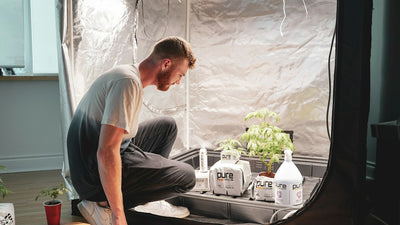
There are roughly 3.3 million home cannabis growers in the US right now, and a growing share of them aren't content just running purchased seed to harvest anymore. They're saving pollen, crossing plants in a spare corner of the tent, and asking a question that used to belong exclusively to seed companies: what happens if I cross this with that?
That question is the whole of breeding. It's not a lab discipline requiring a pipette and a degree in genetics -- it's controlled pollination, observation, and patience, and it's genuinely within reach of anyone with a tent, a few extra months, and the willingness to grow out more plants than they'll keep. People have been doing exactly this with corn, tomatoes, and dogs for centuries without a lab in sight. Cannabis is no different, and the last decade of legal access has put more raw genetic material in front of home growers than at any point in the plant's history.
There's also a clock running on this hobby that has nothing to do with horticulture. A federal law change working through Congress right now would reclassify seeds from THC-potent cultivars as a controlled substance, which strikes directly at how home breeders get outcross material and rare genetics through the mail. We'll walk through the actual mechanics of breeding -- pheno hunting, stabilizing a line, what marker-assisted testing actually does for a home grower -- and then get into exactly where that law stands today, because the timeline matters more than most growers realize.
What Breeding Actually Means (It's Not What You Think)
Strip away the mystique and breeding is mechanically simple: you take pollen from a male plant you've chosen and dust it onto the pistils of a female you've chosen, then let her finish flowering and collect the seeds she sets. That's it. Everything else in breeding -- the selection, the culling, the years of refinement -- is what happens around that one act, not inside it.
It's worth saying plainly because a lot of people assume breeders design traits from scratch, engineering a terpene profile or a yield characteristic into existence. They don't. Virtually every named cultivar you've ever seen on a dispensary shelf was found, not invented -- a breeder grew out a batch of seeds, noticed one plant doing something the others weren't, and built a program around preserving that individual. The raw material is natural variation. The skill is recognizing it and knowing what to do with it once you have.
Here's the part that trips up a lot of first-time breeders: a cross doesn't hand you one new plant. It hands you a population of siblings, usually called the F1 generation, and those siblings can differ from each other dramatically even though they share the exact same two parents. Plant a pack of ten F1 seeds from the same cross and you might get one that finishes in 8 weeks smelling like citrus, one that stretches to the ceiling with almost no smell at all, and one that looks nothing like either parent. That variability is the entire engine of breeding -- without it, there'd be nothing to select.
Home growers are actually well positioned for this work, more than people give themselves credit for. You don't need a research facility. You need space to grow out a meaningful number of plants, patience to run multiple generations, and a willingness to kill plants that don't meet your bar. Before you pop your first breeding seed, though, decide what you're actually chasing -- a specific terpene profile, a yield trait, a plant structure suited to your tent's height, or simply locking in the stability of a favorite cultivar that's currently too variable. That goal shapes every selection decision you'll make for the next year.
Pheno-Hunting: The Technique Behind Every Strain You've Ever Smoked

Photo by CRYSTALWEED cannabis via Unsplash.
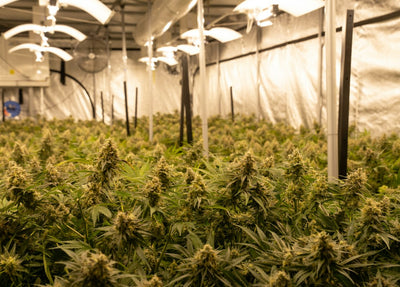
Pheno-hunting is the technique underneath every strain name you've ever recognized. You pop a batch of seeds from a given cross, grow every one of them out, and walk the canopy looking for the plant that stands apart from its siblings. Commercial breeders might pop a few hundred to a few thousand seeds from a single cross hunting for the one in five hundred that does something genuinely special -- an unusual terpene expression, exceptional resin coverage, a structure that yields unusually well. Home growers obviously aren't working at that scale, but the principle doesn't change just because the numbers shrink.
What you're actually screening for is concrete and observable, not mystical. Vigor in the seedling and vegetative stage. Bud structure -- does it stack tight or run airy and loose. Aroma and terpene intensity, which you can usually pick up by week 4-5 of flower just by working the canopy with your hands. Resin production, visible under a loupe well before harvest. Finish time, tracked in actual days from flip to chop, not a guess. And critically, how the plant handles your specific climate -- a phenotype that shrugs off humidity in a dry Colorado garage might rot in a humid Gulf Coast tent, and you won't know until you grow it there yourself.
Keep a grow journal organized around plant numbers, not strain names. The moment you're hunting phenotypes within a cross, the strain name on the seed pack tells you almost nothing -- every single seed is its own individual until it proves otherwise in your garden. Number your plants, note their traits weekly, and resist the urge to lump them together mentally just because they came from the same pack.
Numbers matter more than most new breeders expect. Ten seeds from a cross will rarely reveal what's actually possible in that genetic pool -- rare traits are rare, and a small sample simply won't contain them most of the time. A hundred seeds gives you a real shot. If your space only allows ten at a time, run the cross across multiple seasons rather than assuming one small batch told you the whole story.
Once you do find a standout, the job shifts from hunting to preservation. Keep that individual alive as a mother plant, or take clones and bank them, because that specific phenotype -- not the cross in general -- is now the thing you're building a program around.
Stabilizing a Line: Backcrossing, Selfing, and Culling

Photo by CRYSTALWEED cannabis via Unsplash.
Finding a great individual plant is only step one. On its own, that plant's seeds will still produce a variable population, because it's still heterozygous for whatever traits you love about it. Turning a single standout into something you can call a stable line takes structured inbreeding over several generations, and there are two standard ways to do it: backcrossing and selfing.
Selfing means making a plant pollinate itself -- usually induced with a colloidal silver or STS spray that triggers male flowers on an otherwise female plant, giving you pollen genetically identical to the mother. Self a plant and you lock in that individual's traits about as fast as possible, because you're not introducing any outside genetic material at all. The tradeoff is that selfing narrows genetic diversity quickly, generation over generation, which can eventually show up as reduced vigor or a population that's stable but fragile.
Backcrossing takes a different route: you breed an offspring back to one of its original parents rather than to itself. This preserves more genetic diversity in the population while still pulling successive generations toward whatever trait you selected for. It's slower than selfing but generally produces a more resilient line in the long run, which is why most serious breeding programs lean on backcrossing more heavily than selfing.
None of that matters, though, without culling -- and this is the part nobody wants to talk about because it isn't glamorous. Standard practice is three to five generations of backcrossing or selfing, culling the outliers hard each round and only advancing plants that actually match your target. The cross gives you the raw variation; culling is what turns that variation into consistency. Breeders who get attached to plants and skip this step end up with a line that's stable in name only.
Run that process for three to five generations and you land close to true-breeding seed -- offspring that reliably resemble their parents instead of scattering across a wide range of expressions. It's a real time commitment, typically two to three years depending on how many generations you can run per year indoors.
There's a technique worth watching even if you can't use it yet: the first successful doubled haploid production in cannabis via anther culture has only been reported in the last two years. In theory, doubled haploids could compress years of backcrossing into a single generation by creating fully homozygous plants almost instantly. It's not commercially accessible to home breeders today, but it's the kind of development worth keeping an eye on if you're planning a multi-year breeding project.
DNA Markers and Modern Tools for the Home Breeder

Photo by Jack H via Unsplash.
Marker-assisted selection sounds like something reserved for university labs, but the concept is straightforward: certain single-gene traits in cannabis, like the genes controlling THCAS or CBDAS production, are linked to identifiable DNA markers. Test a seedling's tissue for those markers and you can predict its likely chemotype before it's ever flowered -- whether it's going to lean THC-dominant, CBD-dominant, or something in between.
Why does that matter for a home breeder rather than just a commercial one? Time and space. If you're growing out 50 seedlings from a cross looking for a specific chemotype, testing early means you can cull the ones that don't match your target at 3-4 weeks of age instead of carrying them all the way through an 8-9 week flower cycle just to find out they were never going to work. In a home setup where every square foot of tent space is precious, that's months of grow cycles you get back.
You don't need your own lab equipment to use this. Several commercial genetic testing services now offer mail-in kits built specifically for home and small-scale breeders -- clip a small tissue sample, mail it in, and get back sex determination and major cannabinoid pathway results before the plant even shows preflowers. It's not free, and it's not necessary for every project, but for a serious multi-generation breeding effort it can meaningfully shorten the timeline.
The low-tech tools matter just as much as the DNA testing, and they're a lot cheaper. A jeweler's loupe, the kind you'd use to check trichome maturity at harvest, is just as useful earlier in the season for evaluating resin development differences between siblings. A simple notebook -- or even a basic spreadsheet -- tracking flowering time and node spacing across your numbered plants will tell you more about a line's consistency than any single high-tech test. Breeding rewards good recordkeeping more than it rewards fancy equipment.
Keep your expectations calibrated, though. Marker testing narrows the field -- it tells you which plants are worth your limited grow space and which aren't. It doesn't replace actually growing the survivors out to flower and evaluating them with your eyes, nose, and loupe. A plant can have exactly the chemotype markers you wanted and still be a mediocre plant in every other respect. The test is a filter, not a verdict.
The Federal Seed Law Every Home Breeder Needs to Track

Photo by Nishat Samadzai via Unsplash.
Here's where things get genuinely urgent, and it's not a horticultural detail -- it's a legal one that directly affects where home breeders get genetics. On November 12, 2025, Congress passed a new federal hemp definition under Section 781 of Public Law 119-37, shifting to a total THC standard of 0.3% dry weight that counts THCA and delta-8 toward the limit, with finished hemp products capped at 0.4 mg of total THC per container.
The detail that should worry home breeders specifically: under this standard, seeds from cultivars bred for THC potency get reclassified out of the hemp category and into federally controlled substance territory -- despite the fact that cannabis seeds themselves contain essentially no THC and never have. It's a strange outcome of how the law is written, but the practical effect is the same regardless of the biology: seed becomes harder to move legally across state lines.
That deadline has already slipped once. On September 1, 2026, the House voted 370-48 to pass H.R. 6500, which was signed into law the following day and pushed the enforcement date from November 12, 2026 to December 11, 2026. That's not a repeal -- it's a month-long reprieve, and Congress is still actively arguing about what comes next.
Two competing bills are sitting in front of lawmakers right now. H.R. 7010/7024, the Hemp Planting Predictability Act, would push enforcement all the way out to November 2028. H.R. 6209, the American Hemp Protection Act, would repeal Section 781 entirely rather than just delaying it. As of the most recent reporting, neither has passed, which means the December 11, 2026 date is the one currently on the books.
Worth being clear about what this law doesn't touch: state-licensed cannabis programs are unaffected. If you're buying flower or clones from a licensed dispensary in a legal state, that transaction runs under state law and this federal hemp definition has no bearing on it. What it does threaten is interstate seed shipping and seed banks specifically -- which happens to be exactly where most home breeders source outcross material, rare phenotypes, and genetics they can't find locally.
If you've got a breeding project that depends on ordering seed from out of state -- an outcross parent, a specific cultivar you need for a program you've already started -- don't wait until December 2026 to see how this resolves. Source what you need now while the picture is still clear.
Of every skill in cannabis cultivation, breeding rewards patience more than any other, full stop. The growers who actually produce something worth keeping are the ones willing to cull hard in generation two even when a plant looks promising, and to wait through a third or fourth generation instead of declaring victory on the first good-looking pheno. Attachment is the enemy of a stable line. The plant that impresses you in week one of a hunt is not the plant you should be building a program around until it's proven itself against its siblings and held up across a generation of offspring.
The genetics landscape has never been more open to home growers than it is right now -- more cultivars, more seed banks, more testing tools, more accumulated knowledge shared freely between growers who used to guard it. But the legal ground under seed access is shifting on a timeline measured in months, not years, and there's no guarantee interstate shipping stays this easy through 2027 and beyond. If there's a project you actually care about, that's a reason to act on it now rather than assume the door stays open.
You also don't need rare or exotic genetics to start. A clean, stable baseline makes every selection decision downstream easier, because you're not fighting instability that was already baked into the seed before you ever made a cross. Starting from well-bred, stable seed from a reputable source like Seedtiva gives you exactly that kind of clean starting point -- and from there, what you build is entirely up to how much patience you're willing to bring to it. Results will always depend on your climate, your setup, and the genetics you choose to work with, but the fundamentals don't change: select hard, cull harder, and give it the generations it actually needs.
Sources
- Best breeding practices by breeder 2026 and on!!! - Overgrow.com
- Fire Follower: Top 50 Breeders to Try in 2026 - Leaf Magazines
- Where to Buy Cannabis Seeds as a Home Growing Newbie in 2026
- Could US Home Growers Lose Access to European Seeds?
- Grow Awards 2026 Winners: Community-Voted Best Cannabis Brands and Gear