Coco Coir vs True Hydro: Choosing Your Cannabis Grow Medium
Photo via Pexels.
Here's the decision that actually stalls people out at checkout: you've got a grow kit in your cart, seeds picked, and now you're staring at a medium choice you didn't expect to matter this much. Soil feels safe because it's what everyone's grandfather grew tomatoes in. True hydro promises the fastest turnaround times you'll find anywhere, but it has a reputation for punishing anyone who looks away for three days. Coco coir sits in between, and most first-time buyers don't understand why it's even in the conversation with hydro at all.
Here's the part that trips people up: coco coir is technically classified as a hydroponic medium. It's inert, it holds no nutrient charge of its own, and you feed it on a schedule the same way you'd feed a DWC bucket. But it's structured and handled like soil -- you can hand-water it, let it hold some buffer, walk away for a day without disaster. That dual identity is exactly why coco confuses people shopping for their first setup. It doesn't behave like the soil bag at the garden center, and it doesn't demand the vigilance of a reservoir either.
The commercial side of the industry is voting with capital. RIOCOCO opened a new processing facility in Katupotha, Sri Lanka in July 2026 -- now the largest single coco production plant in the country -- built specifically to keep pace with demand from berry, tomato, and cannabis operations worldwide. That's not a niche substrate anymore; that's infrastructure being built for a medium that's become mainstream.
So which one should go in your tent? The honest answer isn't about chasing the biggest yield number on a forum post. It's about how much time you actually have to check a pH meter every morning, how much you're willing to spend on pumps and chillers upfront, and how much troubleshooting patience you have when something goes sideways at 11pm on a Tuesday.
What Coco Coir Actually Is (and Why It Counts as Hydro)

Photo by welcometojo_ via Unsplash.
Coco coir is shredded, aged coconut husk fiber, and on its own it's completely inert -- no nitrogen, no potassium, no cation exchange going on that feeds the plant anything meaningful. Whatever your plant gets, it gets from the bottle you're mixing into your watering can or drip line. That's the same fundamental principle as deep water culture: the grower controls the nutrient input, and nothing meaningful comes from the substrate itself. It's why horticultural science classifies coco as a soilless hydroponic substrate even though it looks and feels like potting mix.
What makes coco genuinely useful, though, is that this hydro-style feeding gets delivered through a structure that behaves forgivingly. You're not managing a static reservoir that the whole root mass shares -- you're watering or drip-feeding a substrate that holds moisture in reserve between feeds. That combination gets you growth rates that creep close to true hydro without needing an air pump, a chiller, or the discipline of checking a reservoir twice a day.
The research backs this up. Caplan et al. (2017) compared coco-based substrates against peat-based mixes under matched feeding regimens and found measurably faster vegetative growth in the coco treatments. That single result is a big part of why coco has quietly displaced peat as the substrate of choice in serious grow rooms over the past decade -- it's not just tradition or marketing, there's a real growth-rate advantage tied to how coco's fiber structure interacts with roots and oxygen.
There's also a regulatory push accelerating the shift, at least in the UK, where peat extraction is being phased out ahead of a 2030 ban. Growers who've built their whole feeding program around peat-based mixes are being forced to relearn their runs on coco, and reusable coco is turning into less of an upgrade and more of a mandatory transition.
Mechanically, what coco does that peat and straight perlite can't match individually is hold air and water in the same fiber structure simultaneously. Perlite alone drains almost everything and dries fast; peat holds water but compacts and suffocates roots over time. Coco's husk fibers create pockets that retain moisture while still leaving air gaps around the root zone, which is why it drains quickly after a feed but doesn't crash to bone-dry within hours the way straight perlite will.
True Hydro (DWC/RDWC): What You're Actually Signing Up For

Photo by 2H Media via Unsplash.
A true DWC setup isn't complicated to describe, but it's a real shopping list: a reservoir bucket or tote, net pots filled with clay pebbles or rockwool cubes, an air pump feeding airstones at the bottom of the reservoir, a pH meter, an EC or PPM meter, pH up and pH down solution, hydroponic-specific nutrients formulated for soilless feeding, and ideally reverse osmosis water so you're not fighting your tap water's baseline mineral content every single day. None of this is optional -- skip the air pump and your roots suffocate within hours in stagnant water.
Root-zone temperature is the detail beginners underestimate most. Once reservoir water climbs above 22C (72F), the risk of Pythium root rot rises sharply, because warm, oxygen-poor water is precisely the environment that pathogen needs to establish and spread through a root mass. A reservoir chiller or at minimum a well-insulated tote in a cool room isn't a luxury item in hydro -- it's the difference between a clean run and losing an entire crop to root rot in the middle of flower.
The payoff for all that equipment is real speed. Hydro consistently runs 20-30% faster than soil, because roots sitting in a fully oxygenated nutrient solution face essentially zero resistance -- no searching through substrate for nutrients, no waiting on microbial breakdown, just direct uptake. That's the fastest cycle time any home medium can offer.
The tradeoff is margin. DWC and RDWC need to be held in a tight 5.5-6.0 pH window, noticeably tighter than what coco or soil will tolerate, and that window doesn't hold itself -- daily monitoring is basically mandatory, not a nice-to-have. A shared reservoir with no buffering capacity means drift happens fast and it happens to every plant on the system simultaneously.
Which gets at the honest downside nobody selling hydro kits likes to lead with: a power outage that kills your air pump, a pump that fails quietly overnight, or a few days where pH checks get skipped because life got busy -- any of these can wipe out a reservoir in a way soil or coco simply won't. A soil pot with a missed watering wilts and recovers. A hydro reservoir that crashes anoxic for two days can take the whole root system with it.
Growth Rate, Yield, and the Numbers Worth Trusting

Relative to a soil baseline, plants grown in coco coir tend to reach a faster growth speed, while true hydroponic (DWC) systems achieve the fastest growth of the three, making hydroponics the quickest growing medium overall.
Line the three mediums up by growth speed and the hierarchy is pretty consistent across serious grow logs: hydro runs 20-30% faster than soil, and coco lands in the middle at roughly 10-20% faster than soil. That's a real, repeatable spread, and it's the number worth anchoring your expectations to rather than the more dramatic figures that circulate online.
The one you'll see quoted constantly -- hydro yielding 30-50% more than soil -- deserves some pushback. That figure tends to come from comparisons between dialed-in expert hydro setups and comparably dialed-in soil setups, both run by growers who've spent years tuning their systems. It's not a guarantee that shows up automatically for someone who buys a DWC kit for the first time. Yield gaps that size come from expertise stacked on top of the medium, not from the medium alone.
In practice, a clean, consistently managed soil or coco grow will outyield a fumbled, under-monitored hydro grow every single time. I've seen it happen in the same tent, same strain, same lights -- one grower checking pH religiously in coco outyields another who let their DWC reservoir drift for a week. The medium isn't magic. Consistency is what actually drives the number on the scale at harvest.
Where coco's middle-ground speed becomes a genuinely clear advantage is autoflowers. Autos run on a fixed, age-based internal clock regardless of what you do to them -- they don't wait around for soil's slow, microbially-mediated nutrient release the way a photoperiod plant grown patiently might tolerate. Coco's fast, on-demand feeding schedule suits that fixed timeline far better, which is exactly why so many autoflower-focused grow kits are built around coco rather than soil.
None of this overrides the basics, though. Climate control, room setup, and genetics still account for most of the variance you'll see between two grows using the identical medium. A weak or unstable genetic line won't suddenly perform in hydro just because the medium is faster, and an unstable room environment will undercut even a perfectly run coco feeding schedule. The medium sets a ceiling; it doesn't build the floor.
pH, EC, and Daily Management: Coco vs Hydro Side by Side
Put the two side by side on daily management and the gap becomes obvious fast. Coco's sweet spot sits at pH 5.8-6.2 -- a noticeably wider, more forgiving band than hydro's tight 5.5-6.0 window. That half-point of extra room matters more than it sounds like it should; it's the difference between a grower who can check pH every couple of days and one who needs to check it every single morning without fail.
Part of why coco tolerates more drift is how it's typically run. Most coco setups use a hybrid drain-to-waste or recirculating approach, fed by hand watering or drip lines, rather than one shared static reservoir. A missed feeding in coco means that pot goes a little drier than ideal for a stretch -- it doesn't tank the entire system's chemistry the way a missed pH check in a shared DWC reservoir does, because there's no single body of water every root is drawing from simultaneously.
Hydro, by contrast, requires daily EC/PPM and pH checks as an absolute minimum, because the whole root system shares one static reservoir with nowhere to buffer a mistake. If that reservoir drifts to pH 6.8 overnight, every plant on the system is dealing with nutrient lockout by morning, not just the one you forgot to check.
That doesn't mean coco lets you off the hook entirely. It still needs regular runoff EC checks -- pulling and testing what drains out the bottom of the pot -- to catch salt buildup in the fiber before it becomes a lockout problem. Coco fiber holds onto excess salts if you're not periodically flushing with a lower-EC feed, and skipping runoff checks for weeks is how a coco grow quietly turns into a nutrient lockout mystery.
The bottom line for anyone picking their first grow kit: coco's wider margins make it the more forgiving substrate to learn on, while still training a grower in the same feeding discipline -- reading EC, adjusting pH, watching runoff -- that true hydro will eventually demand at a stricter level. It's not a compromise substrate; it's a legitimate training ground for hydro-style growing.
Buying Coco That Won't Sabotage Your Grow
Not all coco is created equal, and the bag you grab off a shelf can quietly sabotage an otherwise well-run grow before you've even planted a seed. The single most useful word to look for on the label is Triple Washed. That means the coir has been thoroughly rinsed to strip out the naturally occurring sodium and potassium salts that raw coconut husk fiber carries from processing -- salts that, left in place, will actively lock out calcium and magnesium uptake no matter how well-balanced your feed schedule is.
Low EC coco is the practical result of that washing process, and it matters because it determines whether you can feed at full strength starting on day one. Cheap, unwashed coco often reads high on an EC meter straight out of the bag, which forces you into a string of blank waterings just to flush the excess salt before you can start feeding nutrients at all -- wasted time and wasted water on a grow that hasn't even started yet.
RHP Certification is the European horticultural standard worth knowing if you've ever been burned by a bag that behaved completely differently from the last bag of the same brand. It guarantees consistency batch to batch on particle size, buffering, and salt content, which matters enormously once you've built a feeding schedule around a specific substrate's behavior.
This is where the scale of commercial supply becomes reassuring rather than just a curiosity. RIOCOCO's new facility in Katupotha, Sri Lanka -- now the largest single coco production plant in the country, opened July 2026 -- exists specifically to standardize that consistency at volume. CEO Shan Halamba has been blunt about the stakes: the medium has to be consistent every single time, batch after batch, because commercial berry, tomato, and medical cannabis operations can't afford to relearn their feeding program every time a new shipment arrives. That's the company's 22nd year supplying coco globally, and that kind of longevity in a horticultural supply chain doesn't happen by accident.
Cheap, un-rinsed coco remains one of the most common causes of unexplained nutrient lockout in first-time coco grows -- growers chase cal-mag deficiencies for weeks without realizing the substrate itself was the problem. Spending a few extra dollars per bag on triple-washed, low-EC, ideally RHP-certified coco is genuinely one of the cheapest insurance policies available in this hobby.
Matching the Medium to Your Grow Kit and Goals

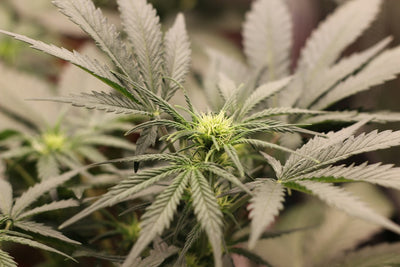
Photo by CRYSTALWEED cannabis via Unsplash.
If you're a beginner, or you're running autoflowers out of a seed kit, coco coir is the practical pick without much argument. Wide pH tolerance, fast on-demand feeding that matches an auto's fixed clock, and no reservoir sitting there ready to crash the whole grow if you have a rough week. It's the setup that lets you make small mistakes and still finish with a real harvest.
If you're chasing maximum speed and you're honestly willing to check reservoirs daily and keep root-zone temperature under 22C without fail, DWC or RDWC delivers the fastest cycle times available in home cultivation. That's not a knock on hydro -- it's simply a setup that rewards a specific kind of grower, one who treats the daily check as non-negotiable rather than aspirational.
Budget is a real factor here too, and it's worth being upfront about it. Coco setups need comparatively little hardware upfront -- fabric or plastic pots, saucers to catch runoff, a watering can or a basic drip system. Hydro's cost stack is heavier: pump, airstones, reservoir, pH and EC meters, and often a chiller if your grow space runs warm. For someone building their first tent on a modest budget, that hardware gap alone can be the deciding factor.
Whatever medium you land on, the genetics underneath it matter just as much as the feeding system. A well-bred seed from a reputable source like Seedtiva adapts more predictably to either coco or hydro feeding than an unstable or poorly stabilized genetic line will -- consistent genetics mean consistent nutrient uptake patterns, which makes dialing in your feed schedule far more straightforward regardless of medium.
Worth knowing too: plenty of experienced growers don't treat this as a permanent either-or choice. Running coco under drip irrigation is a common stepping stone toward full RDWC, letting a grower build real pH and EC discipline in a forgiving medium before graduating to a system with zero room for error. It's a sensible progression, not a compromise.
Strip away the marketing and the forum arguments, and the medium was never the main variable. Consistency in feeding, pH, and root-zone conditions determines yield far more than whether the label on your setup says coco or hydro. A grower who checks runoff EC every few days and keeps their feed schedule steady will beat a neglected reservoir every time, regardless of which system looked more impressive on paper.
For most people buying a kit -- especially anyone running autoflowers on a fixed clock -- coco coir's forgiveness paired with its near-hydro speed makes it the smarter default, not a beginner's consolation prize. True hydro remains the reward waiting for growers who are ready to check reservoirs daily and hold root-zone temperature under control without exception.
And the ground is shifting under this whole conversation. As commercial supply scales up -- RIOCOCO's Katupotha expansion being the clearest recent signal -- and regulations like the UK's 2030 peat ban push growers off older substrates, coco coir is quietly becoming the industry's baseline medium rather than just the safe compromise for first-timers. It's the direction serious cultivation is heading, kit-based or otherwise, and outcomes will still come down to the same fundamentals: steady hands, a good feeding routine, and genetics worth the investment in the first place.
Sources
- Best Coco Coir Nutrients for Cannabis? | Grow Weed Easy
- Soil vs Coco vs Hydro — Which Growing Medium Is Best? | Toledo Indoor Garden
- Best Grow Medium: Soil vs Coco vs Hydroponics - Kind Green Buds
- Growing cannabis in soil vs coco or hydro - Cannabis World Blog - SuzySeeds
- Growing Cannabis In Coco Coir Or Peat Moss - RQS Blog