Cannabis in Cairo's Courts: What 19th-Century Records Reveal
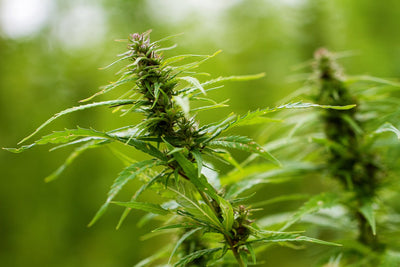
Photo by Sevil Mert via Unsplash.
Walk through the popular version of this story and you'll hear that Cairo's medieval Qalawun bimaristan held the secrets to centuries of cannabis treatment in one tidy, crumbling building. It's a tidy story, and it's wrong in a specific, correctable way. The Qalawun complex, founded in 1284-85, did stand for over six centuries and wasn't torn down until 1901 -- so the timeline isn't the problem. The problem is where the actual cannabis paper trail lives. It isn't in the bimaristan's own surviving documents. It's split across two very different kinds of nineteenth and early twentieth century archives: the admission ledgers of a newer psychiatric institution, and the case files of foreign consular courts operating under a parallel legal system inside Egypt.
That split matters because it tells you something about how Ottoman Egypt actually governed a substance it had already outlawed on paper decades before anyone wrote a clinical report about it. On one side you have the Egyptian Government Hospital for the Insane at Abbassia, where physicians were counting hashish among the causes of admission and building statistical arguments about a public health crisis. On the other side you have British, Italian, and other consular courts prosecuting hashish den operators who were, thanks to the capitulations, largely untouchable by Egyptian police. Read together, these records show a government wrestling with hashish as both a medical emergency and a jurisdictional headache -- and doing so well before any international body had drawn up a single treaty addressing cannabis.
The Qalawun Bimaristan's Long Afterlife
Sultan al-Mansur Qalawun laid down the foundation for his bimaristan in 1281 and had it functioning by 1285, attaching to it a waqf -- a charitable endowment -- that explicitly committed the institution to treating men and women alike, free of charge, regardless of their ability to pay. That's a remarkable clause for the period, and it's part of why the complex became one of the most cited medical foundations in Mamluk and later Ottoman Cairo. The bimaristan wasn't a ceremonial ruin sitting idle for six hundred years; it remained an active part of the city's medical and architectural fabric well into Ottoman rule, continuing to treat patients, train physicians, and anchor a section of Cairo's old quarter until it was finally demolished in 1901.
The Egyptian physician and medical historian Ahmed Shafei, writing in the twentieth century, traced the institutional lineage of Egyptian psychiatric care directly back to the Qalawun foundation, treating it as the ancestral root of the modern system that would eventually produce Abbassia. That lineage is real and worth taking seriously. But lineage isn't the same thing as a document trail. The surviving Qalawun-era records -- endowment deeds, architectural inventories, scattered references to teaching and treatment -- describe general medicine, surgery, and the administration of a charitable hospital complex. They say essentially nothing about hashish specifically.
For anyone trying to actually trace cannabis use through Egyptian institutional history, this distinction is the whole ballgame. If you go looking for hashish in the Qalawun archive, you'll find silence, not because the information was suppressed but because the institution predates the moment when hashish became a named clinical category worth tracking in admission records. The real paper trail starts later, in a building with a different name and a very different set of bureaucratic habits.
Abbassia Asylum and the Birth of a Diagnosis

Photo by Meruyert Gonullu via Pexels.
That building is the Egyptian Government Hospital for the Insane at Abbassia, the institution modern historians actually connect to the Qalawun lineage when they're hunting for hashish-specific evidence. Abbassia kept admission ledgers, and those ledgers recorded cause of insanity as a formal category -- which meant hashish, when physicians believed it was responsible, got written down and tallied. This is where the quantitative record of cannabis and mental illness in Egypt actually begins.
Dr. J. Warnock, the asylum's medical director for years, became the central figure in documenting this. His 1903 paper in the Journal of Mental Science, titled Insanity from Hasheesh, pulled together years of clinical observation into a formal medical argument that hashish use was driving a measurable share of Egypt's asylum population toward psychosis. He wasn't working from a blank slate -- his earlier 1895 findings had already reported that hashish alone accounted for roughly 15% of admissions, with another 15% attributed to hashish combined with alcohol. Put together, that's nearly a third of admissions linked in some way to the drug, a striking figure for any asylum director to be publishing in a British psychiatric journal at the turn of the century.
The Ministry of Public Health's Seventeenth Annual Report, covering 1911 and focused on the Abbassia hospital, remains one of the primary sources historians still pull from directly, giving a granular, bureaucratic snapshot of admissions, diagnoses, and institutional reasoning in a way that newspaper accounts from the period simply don't. Building on this kind of material, historian Liat Kozma's 2011 article in Middle Eastern Studies found that by the early twentieth century, hashish was being blamed for approximately 27% of asylum cases, with Egyptian officials explicitly framing it as a public health threat rather than a vice or moral failing. None of this happened in a vacuum detached from global drug policy, either -- it predates the 1925 international opium conventions, where cannabis first received serious attention on the world stage, by a decade or more. Egypt's medical bureaucracy was building its own case against hashish well before anyone outside the country was paying attention.
Decrees Before the Diagnosis: 1868 to 1884

Photo by mzmatuszewski0 via Pixabay.
Here's the part that tends to surprise people: the legal crackdown came first, and the clinical justification came later, not the other way around. Egyptian authorities issued a string of decrees between 1868 and 1884 banning hashish cultivation and consumption, years before Warnock or anyone else at Abbassia had published a word about admissions data. The asylum statistics that later got cited as justification for prohibition were, chronologically speaking, catching up to a policy that already existed.
The Ottoman government in Constantinople weighed in directly in 1877, ordering that all hashish stocks held in Egypt be destroyed -- a blunt, supply-side move aimed at stock on hand rather than future cultivation. Egypt followed up in 1879 by moving to ban the importation of hashish outright, closing off the trade route as well as domestic production, at least on paper. Together these measures tightened the net from both ends: grow it, you're in violation; bring it in from outside, you're in violation; hold onto existing stock, expect it confiscated and destroyed.
What's easy to miss is the motive behind these early laws. This wasn't primarily a public-health campaign in the way Abbassia's later reports framed things. Hashish had functioned as a tax-farmed revenue source for Egyptian and Ottoman administrators for years, and these decrees were driven as much by concerns over public order and government revenue control as by any medical anxiety about addiction or insanity. The framing of hashish as a clinical menace came afterward, layered onto a prohibition regime that already existed for more mundane fiscal and administrative reasons.
That gap between the law on the books and what was actually happening on the ground didn't close on its own, either. It left a loophole, and a generation later, that loophole is exactly what foreign nationals operating inside Egypt's cities learned to exploit, protected by a legal arrangement that had nothing to do with hashish at all.
Inside the Consular Courts: Evading the Hashish Police

Photo by Quang Vuong via Pexels.
The loophole had a name: the capitulations, a system under which foreign nationals residing in Egypt were subject to their own consular courts rather than Egyptian law and Egyptian police. A British subject caught running a hashish den wasn't answerable to the same authorities chasing down Egyptian hashish traffickers -- he answered, if at all, to the British consular court, which operated under its own procedures and its own appetite for prosecution. That mismatch created exactly the kind of two-tier enforcement problem that shows up again and again in colonial-era legal history, and it's preserved today in a specific set of files.
British consular case records, catalogued as FO 841/104 and FO 847/39, document how organized some of these operations actually were. These weren't furtive, hidden transactions. Case files describe hashish dens with guarded gates, lookouts posted to whistle warnings when police approached, and courtyard wells used specifically to dump contraband before a search could turn up evidence. That's not the behavior of people operating in total secrecy -- it's the behavior of people running a business that they expected, correctly, to be mostly left alone because of their legal status.
Two named cases stand out in the archive: Egyptian Police vs. Pasquale Magri in 1909, and Rex vs. Alex. Tanti in 1914, both involving foreign nationals prosecuted for permitting hashish smoking on premises they controlled. These cases give historians something the asylum ledgers can't: a street-level, operational picture of what a hashish den actually looked like as a going concern, complete with the specific countermeasures operators built into their physical space to frustrate police.
Of everything covered here, this consular court material is arguably the closest thing to literal court records on cannabis use from this period -- distinct from, and complementary to, the clinical record being built simultaneously at Abbassia. One tells you how doctors were counting hashish as a cause of mental illness. The other tells you how hashish was actually being sold, smoked, and protected from prosecution in plain sight.
Put these threads together and it's clear the historical record on hashish in Egypt was never a single archive waiting to be discovered in one dusty building. It's at least three overlapping ones -- the asylum's admission ledgers, the consular courts' case files, and the government's own decrees -- and each one tells a piece of the story the others don't. The bimaristan's legendary status as a medieval medical marvel is real, but it's not where this particular trail leads.
What Egypt's experience lays bare is a pattern that keeps recurring in drug policy history well beyond the Nile Delta: the law arrives first, driven by fiscal pressure or public order concerns, and the medical justification shows up afterward to retroactively explain why the law was necessary. Egypt banned hashish cultivation, stockpiling, and importation between 1868 and 1884. It wasn't until the 1890s and 1900s that Warnock's asylum data gave officials a clinical vocabulary -- 15%, then nearly 27% of admissions -- to describe what the law had already assumed.
Readers chasing primary sources on this should skip the romantic pull of the old bimaristan ruins and go straight to where the paper actually sits: Kozma's published scholarship in Middle Eastern Studies, the Ministry of Public Health's annual reports on Abbassia, and the Foreign Office consular files in the British archives. That's where the record was actually kept.
Sources