Morocco's Kif Tradition and the Rif Hashish Trade
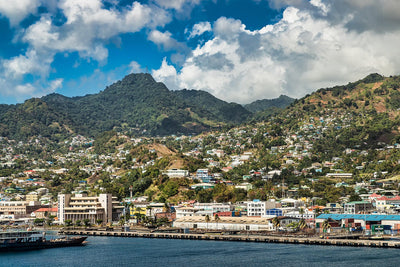
Photo by Imad Bo via Pexels.
In a Rif village, a man packs a short-stemmed pipe with chopped kif and tobacco, lights it, and passes it along. The bowl is small, the smoke is mild, and the ritual is unremarkable to everyone present. It happens in homes and fields, and it was happening long before anyone shipped a block of resin to Marseille or Amsterdam.
That is the tension at the center of Morocco's cannabis story. A plant woven into local life became the backbone of one of the world's best-known illicit trades. Now the state is trying to bring part of it into a licensed, regulated economy.
The record on this subject is patchy, so where sources are thin the dates, origins and legal details below are kept general. Anyone who needs them for more than background should check archival material, ethnographic work, the regulator and the official bulletin.
Key takeaways
- Kif, chopped cannabis smoked with tobacco, is a centuries-old Rif tradition and is distinct from the pressed hashish made for export.
- Hashish production for European markets expanded sharply in the twentieth century, concentrated in the Rif region of northern Morocco.
- Law 13-21 legalized cannabis for medical, pharmaceutical and industrial uses in designated Rif provinces; recreational use remains illegal.
Kif Before Hashish: A Rif Tradition
Kif is chopped cannabis leaf and flower. Traditionally it is mixed with tobacco and smoked in a small pipe with a clay bowl, often called a sebsi. It is a plant product, coarse and green, and nothing like the dense block most Europeans picture when they hear Moroccan.
That distinction matters. Hashish is concentrated resin, separated from the plant and pressed. Kif is simply the plant, cut fine. One is a local smoking material; the other became an export commodity.
Cultivation is associated with the Berber-speaking communities of the Rif, in villages around Ketama and neighboring areas. Social and domestic use there is old, and it predates the export trade by a long margin. Kif was part of hospitality and everyday leisure rather than a black-market good.
When cannabis arrived in Morocco is contested. Some accounts point to centuries-old introduction through trade and migration routes, while others are less certain, and historians have not settled it. Treat any confident origin story with suspicion.
Editorial note: origin claims and traditional-use details should be confirmed with a historian or ethnographic source before publication.
Sultans, Protectorates and Regulated Kif
Historical accounts describe Moroccan authorities permitting kif cultivation in a limited set of Rif tribal territories by the late nineteenth century. The arrangement was bounded: certain areas could grow it, others could not. Exact dates and the tribes involved need archival verification, and I would not put names to them without it.
In 1912 Morocco was split into French and Spanish protectorate zones, and the Rif fell under Spanish administration. Colonial authorities shaped how cultivation was tolerated or restricted. The general pattern was confinement to a defined area, framed around local smoking rather than mass export.
That framing is worth holding onto. For decades the crop was a regional, regulated custom, not the engine of an international market. The tolerance was conditional and administrative, which meant it could also be withdrawn.
Morocco regained independence in 1956. The early postindependence Rif had a tense relationship with the central state, and unrest in the years just afterward is often cited in that context. Details of those events and their aftermath should be verified against specialist histories.
What seems clear is that state authority and local economic reliance on the crop became entangled in this period. A region the center struggled to govern depended on a plant the center had once licensed and later disapproved of. That knot has never fully come undone.
From Kif to Resin: The Export Boom
Hashish production for export expanded sharply in the later twentieth century, with demand from European consumers a major driver. The same plant that supplied local pipes could be turned into something far more portable. Sieving and pressing the resin produced a compact product that was easy to hide and ship.
When those extraction methods spread through the Rif should be confirmed against historical sources. The shift is usually placed in the late twentieth century, but the exact timeline is not something to assert casually.
Ketama became the best-known name in the trade. Moroccan hash turned into a fixture in European markets, and the place name itself became shorthand for the product. A mountain village area now carried a global brand it never chose.
Geography did the rest. The Strait of Gibraltar is only a short crossing from southern Spain, which made northern Morocco a natural corridor for trafficking into Europe. Proximity to the buyers did much of the logistical work.
I am deliberately leaving out production tonnage and area estimates. Any such figures should be taken from the UNODC World Drug Report and cited to a specific edition, since estimates vary by year and method.
The Rif Economy: Farmers, Traffickers and Enforcement
Rif farmers have often been described as dependent on cannabis. The terrain is mountainous, plots are small, and alternative crops struggle to compete in that setting. For many households the plant was the practical option, not an ideological one.
Farmers typically earn far less than traffickers and middlemen further down the chain. Most of the value is captured after the harvest, as the product moves toward ports and across the water. A sourced figure should be used if a number is cited; in general terms, the gap is wide.
Moroccan authorities have run eradication and arrest campaigns, and European governments have pressed Rabat over trafficking. Specific campaigns, arrest totals and seizure data should be verified against official statements and reporting from outlets such as AFP, Le Monde and Morocco World News.
Under the long-standing framework, cultivating, selling and trafficking cannabis outside the new licensed system were criminal offenses, and enforcement fell unevenly on growers, couriers and organizers. Farmers with outstanding warrants sometimes avoided public life as a result.
UNODC has frequently identified Morocco as a leading source of hashish. The current wording in the latest World Drug Report should be checked before quoting it.
Law 13-21 and the Turn Toward Regulation
Law 13-21, adopted in 2021, legalized the cultivation, processing and export of cannabis for medical, pharmaceutical and industrial uses. It did not legalize recreational use. Smoking kif for pleasure remains outside the legal market.
The national regulator, ANRAC, is based in Rabat and oversees licensing. Its formation date and the minister responsible should be confirmed on its official site, anrac.ma, rather than taken from secondary summaries.
Legal cultivation was initially limited to designated Rif provinces, reported as Al Hoceima, Chefchaouen and Taounate. Check whether more have been added since. Cooperatives and licensing sit at the center of the model, and current license counts and harvest figures should come from the regulator.
Royal pardons for cannabis-related offenders have also been reported. Dates, numbers and scope need verification before anyone cites them.
Laws and decrees change. The text of Law 13-21 and its implementing decrees is published in the official bulletin, and readers should check current rules before making any decision that depends on them.
The legal market rests on a crop with local, traditional roots. That makes the real test less about how many licensed firms appear and more about whether Rif smallholders capture the value, not just the processors and exporters downstream.
Any judgment on whether Law 13-21 is working has to rest on the regulator's published licensing and harvest data. This article does not supply those figures, and they should be sourced from anrac.ma and independent reporting before anyone draws conclusions.
Sources
- National Agency for the Regulation of Cannabis-related Activities (Morocco)
- Is Weed Legal in Morocco? Cannabis, Hash and Kif Laws
- Cannabis in Morocco
- State exclusion and mobilization in Morocco’s Rif region: the case of cannabis cultivation - Project on Middle East Political Science
- Cannabis Laws Morocco 2026: Legal or Not? — ADALA
- Morocco drug laws: what's legal & the penalties (2026)