Late-Flower Nutrient Schedules and Resin Production
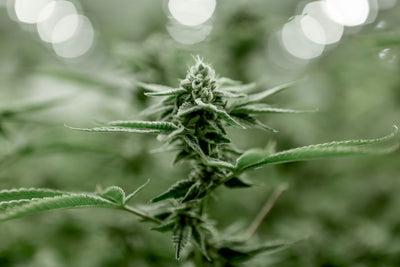
Photo by CRYSTALWEED cannabis via Unsplash.
Pull two plants of the same cut on harvest day. One was fed hard right to day 56, the other tapered starting around week 4. Rub a calyx cluster from each between your fingers. The difference in smell, stickiness and how the heads let go can be obvious, or it can be nothing at all.
For concentrate makers, resin is the product, so late-feed decisions carry more weight than they do for someone buying flower by the gram. Bud weight is a side note when you are washing or extracting. What counts is head density, head integrity and terpene content.
One caveat up front: the evidence here is mixed in places. Genetics, medium, water quality and environment all change how a plant responds, so treat what follows as starting points to test, not rules to obey.
Key takeaways
- Excess nitrogen in late flower is widely linked to lower cannabinoid and terpene concentration, so taper it early rather than late.
- Phosphorus and potassium beyond a sufficiency threshold show weak returns on yield; more is not more resin.
- Flushing is disputed: some trials and growers see no measurable difference, so judge it by your own side-by-side results.
Why Late Flower Is When Resin Is Won or Lost
Trichome head production and cannabinoid and terpene accumulation ramp hard from roughly week 4 of flower through the end. That is the stretch where the plant is spending its resource budget on the things you are actually growing it for. Whatever you feed in this window either supports that spending or competes with it.
A plant has finite carbohydrate and energy. Push vegetative growth late with heavy nitrogen and you are asking it to build leaf and stem tissue while it is also trying to fill glands with terpenes and cannabinoids. Those goals pull on the same pool of resources.
Concentrate makers should judge a run on different metrics than flower growers do:
- Trichome head density across the calyces and sugar leaves
- Head integrity, meaning heads that stay intact and detach cleanly
- Terpene content, which you can judge by nose at the jar and the cure
Genetics set the ceiling. Nutrition decides how close you get to it, and environment works alongside it: VPD, canopy temperature and light intensity all influence how much resin a plant will make. A perfect feed schedule under a hot, dry canopy will still underperform.
Nutrient responses also vary by cultivar, medium and water quality. A cut that thrives on a lean finish in coco may want more in a big soil container. Everything below is a framework for your own trials.
Nitrogen: The Lever That Matters Most
If one nutrient deserves your attention in late flower, it is nitrogen. Published work on nitrogen in flower generally finds that excess late in the cycle lowers cannabinoid and terpene concentration. Take that as a general trend, not a guarantee, and read the primary literature yourself rather than relying on my summary.
In practice, bring nitrogen down sharply by the end of the first third of flower. Leaf fade should begin naturally in the final stretch of flower as the plant mobilizes what it has stored.
Too much nitrogen late looks like this:
- Dark, glossy, clawed leaves
- Slow ripening, with pistils that stay white and trichomes that lag
- A grassy or harsh smell that persists after the cure
Cutting too hard too early shows up differently:
- Fade climbing into the upper canopy well before the final weeks
- A small, airy bud finish
- Pale new growth at the tops
Source matters too. Ammonium-heavy feeds in late flower can stress roots and slow uptake of calcium, magnesium and potassium, so a nitrate-leaning formulation is usually the safer choice. Keep your Ca and Mg in balance while nitrogen drops, because those two often become the limiting factors once the nitrogen cushion is gone.
Do not run this off a fixed calendar. Watch runoff EC and pH. If runoff EC is climbing well above what you are feeding, the plant is not using what you give it and you are stacking salts in the root zone. That is your cue to back off, regardless of what week the label says.
Phosphorus, Potassium and the Bloom Booster Question
Phosphorus is the most overfed nutrient in bloom. Beyond a sufficiency threshold, it is commonly reported to give weak or non-significant gains in yield. That is a general finding, not a promise for your cultivar, but it should make you skeptical of anything that pushes phosphorus far past baseline.
Potassium is more defensible. It supports water movement and sugar transport, so a moderate PK supply through mid flower is sensible. Heavy dosing is where trouble starts, because excess potassium competes with calcium and magnesium and can lock them out.
Bloom booster products deserve a hard look. Many are high in salts, and when you compare a boosted plant against an unboosted sibling, the price per unit of resin gain is difficult to justify. If a booster helps in your room, fine, but make it prove itself.
Two nutrients get less attention than they should. Sulfur and magnesium are involved in terpene synthesis pathways and chlorophyll respectively, so avoid deficiency in weeks 5 to 8. A pale, interveinal yellowing on mid-canopy leaves during that window is worth checking against magnesium before you blame nitrogen.
Here is a simple test you can run yourself:
- Take clones from one mother so the genetics are identical.
- Split them into two groups with the same medium, light and environment.
- Vary only the PK input between groups.
- Harvest, dry and cure both the same way, then compare wash yield.
One cycle will tell you more about your room than any product label.
The Flush Debate: What We Know and What We Don't
Flushing in the last 1 to 2 weeks is widely practiced. It is also disputed. Some trials and growers report no measurable difference in cannabinoid content or smoke quality between flushed and unflushed plants, while others swear by the cleaner flavor.
I would not claim flushing improves flavor as fact, and I would not claim it does nothing as fact either. The honest position is that it is unsettled, and that your medium changes the question.
In soilless and coco, the root zone holds little buffer, so salts build up quickly and a low-EC plain water or light-feed final stretch is a real change to what the plant sees. In living soil, where nutrients come from biology and slow-release inputs, flushing is largely pointless. You cannot wash out a system you are not feeding conventionally.
The practical compromise is to taper the feed gradually and finish with a short low-EC run. Track runoff EC to confirm the salt load has actually dropped. If runoff is still high after several days, the plant is holding more than you think.
Long flushes of 2 weeks or more can force a plant to cannibalize its own leaves. For some cultivars that is an acceptable trade, since the leaves would fade anyway. For others it is a yield cost, with lighter buds and less finishing mass. Learn which kind of plant you have before committing to a long flush.
A Sample Late-Flower Taper for Resin-Focused Grows
Treat this as a template to adjust, not a prescription. Outcomes vary with cultivar, medium and environment.
- Weeks 5 to 6: reduce nitrogen and hold moderate PK, keeping Ca and Mg steady.
- Weeks 7 to 8: lower total EC step by step.
- Final 7 to 10 days: plain water or very low EC, tracking runoff.
For starting pH targets, run coco and hydro at 5.8 to 6.2 and soil at 6.2 to 6.8. Tune from there based on how your cultivar responds.
Flowering time changes where the taper begins. A 9-week indica-leaning cut should start tapering earlier in absolute terms, around the start of week 5, because it has less runway. A 12-week sativa-leaning cut can hold feed longer and start its taper later, but it needs a longer low-EC tail so leaf fade does not arrive too soon.
Keep a log every cycle. At minimum record:
- Feed EC at each watering stage
- Runoff EC and pH
- Trichome color at harvest
- Harvest date
- Dry weight and, if you wash, wash yield
Without that record you cannot tell which change did what.
Finally, watch trichome clarity under a loupe. Harvest timing interacts with nutrition, because a plant that ripens slowly from excess nitrogen will reach cloudy and amber later than the calendar suggests. Decide on the trichomes, not the day count.
What Extractors Notice: Washability and Yield

Photo by Bru-nO via Pixabay.
Extraction labs and processors are the people to ask whether nutrient regime changes washability or hydrocarbon yield. I would frame that as an open question, not a proven link. I have not seen sourced data that settles it.
Anecdotally, plants that finished clean, with intact and well-formed trichome heads, tend to separate more easily for ice water hash. That is grower experience, not published data, and it fits the idea that a plant not fighting excess nutrients has more to put into its glands.
Residual salts and harsh-tasting material show up in the final product. This is most obvious in solventless work, where nothing is purged away and whatever the plant carried ends up in the jar. Hydrocarbon runs may hide some of it, but they do not erase a poor finish.
If you sell to a processor, hand over your feed schedule and harvest date, then ask for wash yield back. That feedback loop is worth more than any forum thread, because it ties your inputs to a number from someone with no stake in your feed program.
Start with the plant itself. Seedtiva carries well-bred genetics suited to resin-focused growing, and the right cultivar sets the ceiling before any feed program does.
The best schedule is the one you have tested against your own control. Run a split trial next cycle, change one variable, and let wash yield settle it instead of forum consensus.
Late flower rewards restraint. Feed to what the plant is using, then get out of its way.
Sources
- Flowering - Gardening at USask - College of Agriculture and Bioresources
- When to Harvest Cannabis for Maximum Potency
- Cannabis Flowering Stage: Week-by-Week Guide (2026)
- Cannabis Flowering Stage: Buds, VPD & Harvest
- How to Increase Trichome Production in the Last 2 Weeks
- Breeding, production, processing and use of specialty cannabis